


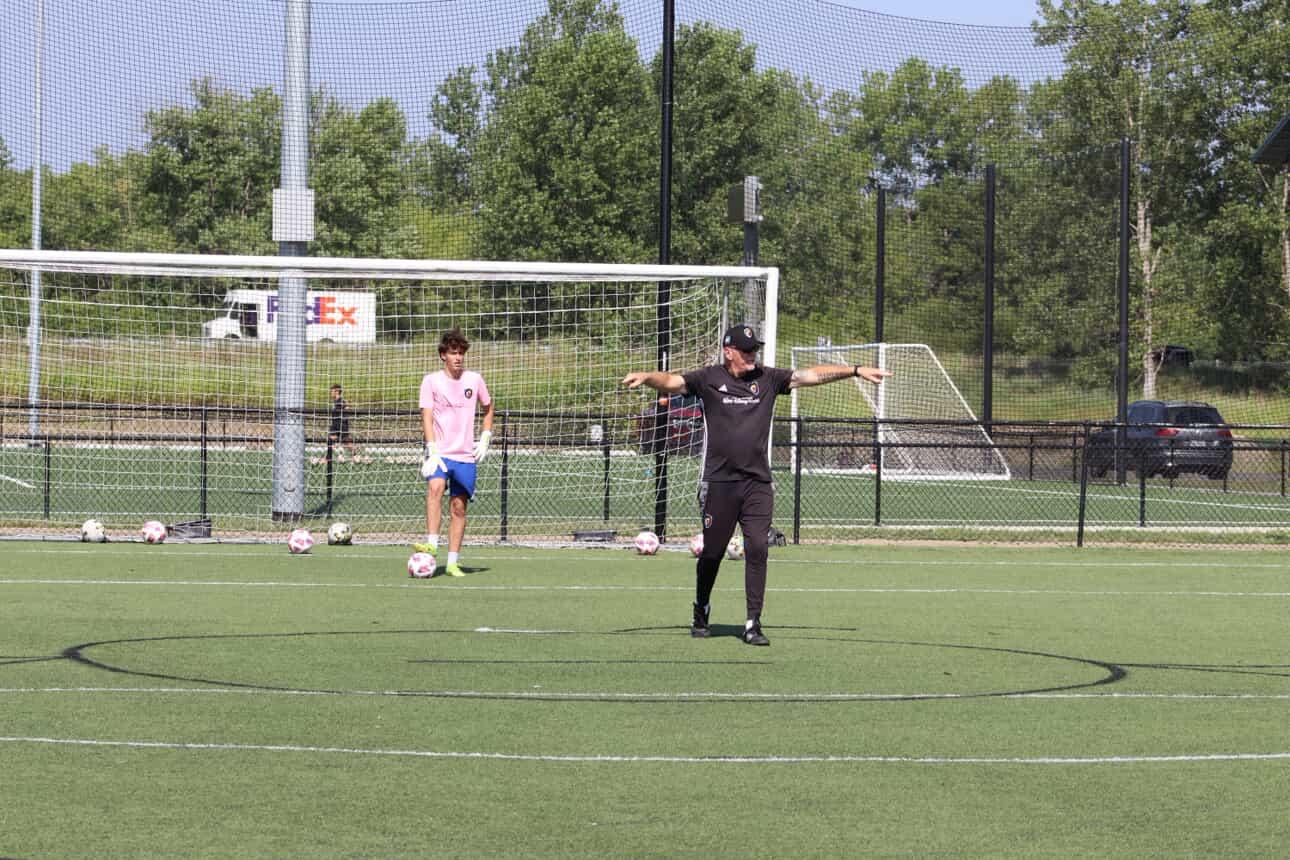

Being the parent of a goalkeeper is a unique journey. You spend games holding your breath, riding the highs of a fingertip save and the lows of a tough goal conceded. Because the position is so specialized, “standard” team training rarely cuts it.
When it’s time to find a private coach or a specialized academy, you aren’t just looking for someone to kick balls at your child—you are looking for a mentor. Here are the four non-negotiables you should look for when choosing a goalkeeper coach.
1. The Power of 15+ Years of Experience
In the coaching world, there is no substitute for time. A coach with at least 15 years of experience has seen a lot: the growth spurts that temporarily mess up a keeper’s footwork, the psychological slump after a bad tournament, and the technical evolution of the modern game.
An experienced coach doesn’t “guess” with your child’s development. They have a proven blueprint because they’ve navigated hundreds of different players through the exact same challenges your child is facing right now. So if they’ve trained goalkeepers without taking a break for 15+ years, that is a good sign.
2. A Pathway from Grassroots to Pro
Why does it matter if a coach has trained professionals if your child is only a teen? Because they know where the finish line is.
A coach who has successfully guided players from youth levels all the way to the professional ranks understands the “long game.” They know which habits need to be built today to prevent a ceiling from forming five years from now. They aren’t just coaching for this weekend’s win; they are building a career-ready foundation.
3. Balancing Encouragement with “The Comfort Zone”
We all want our children to feel confident, but constant praise is a recipe for stagnation. A great coach knows how to pull a keeper out of their comfort zone.
-
The Praise: They celebrate hard work, resilience, and incremental technical improvements.
-
The Critique: When a keeper begins to coast or get “lazy” with their footwork because they are talented, a top-tier coach provides the honest, constructive critique necessary to spark the next level of growth.
4. Coaches vs. “Ball Machines”
Anyone can buy a bag of balls and shoot at a net. If a coach is simply standing 12 yards out and firing shots for an hour, they aren’t coaching—they are acting as a human ball machine and by doing so they’re robbing you out of your money.
Real goalkeeping is about decision-making. You want a coach who focuses on:
-
Angle Management: Positioning before the shot is even taken.
-
Communication: How to lead the defense.
-
Distribution Strategy: When to play short to keep possession vs. when to go long.
-
Command of the Box: Using their voice to prevent shots before they even happen.
Parent’s Pro-Tip: Next time you watch a training session, listen to the coach. Are they only saying “Great save!” or are they asking your child, “Why did you choose to stay on your line there?” The second one is the coach you want.
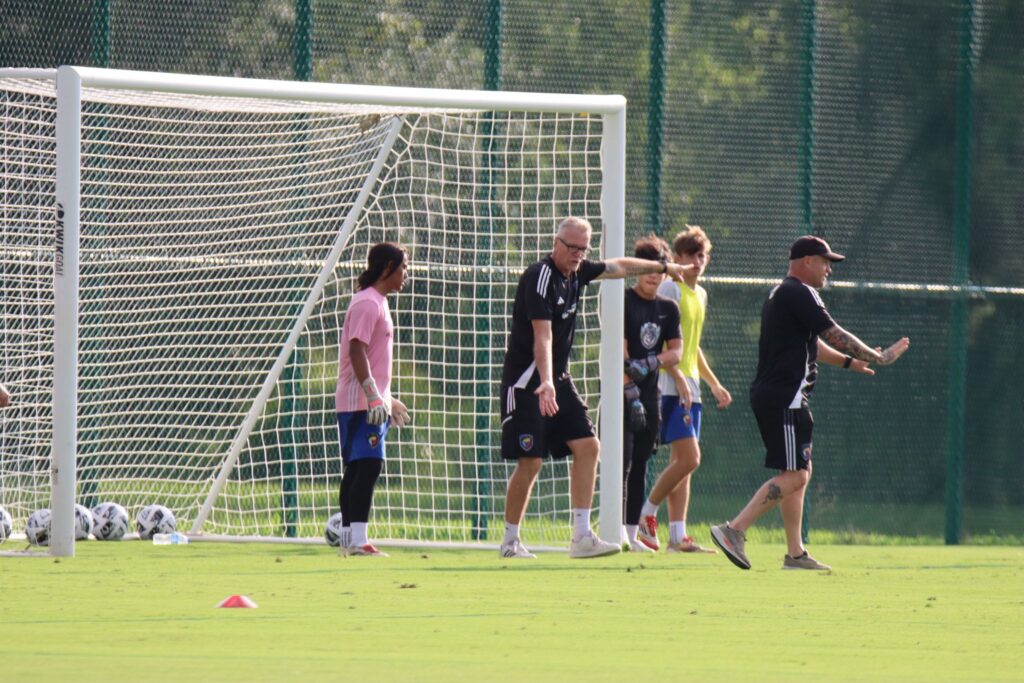
Integrating the goalkeeper into team training is where real tactical growth happens. Here, we’re analyzing the ‘why’ behind a defensive organization drill.
The “Why”: Teaching the player to understand the game so they can coach themselves when they are on the pitch alone.
The Missing Link: Technical vs. Tactical Training
Many parents see a coach “drilling” a keeper and think, “Great, they’re working hard.” But if that coach isn’t feeding your child the tactical components of the game, they are doing them a disservice.
-
Technical Training: Learning how to catch, dive, and set.
-
Tactical Training: Learning where to stand, when to come out for a 1v1, and how to organize a defense.
A “ball-machine” coach focuses on the save. A master coach focuses on the scenario. If your child isn’t being taught how to read the striker’s body language or how to “quarterback” the team from the back, they aren’t being coached—they’re just being exercised.
Why the “Tactical Coach” Wins Long-Term
When a goalkeeper reaches higher levels (MLS Next, GA, ECNL, DPL Academy, or College), everyone has good hands. What separates the starters from the bench is Soccer IQ. By choosing a coach with 15+ years of experience, you are ensuring your child learns:
Angle Management: Reducing the goal size through smart positioning.
Distribution Strategy: When to play short to keep possession vs. when to go long.
Command of the Box: Using their voice to prevent shots before they even happen.
Rick Zucchi Goalkeeper Coach coaching along side head goalkeeper coach at Orlando City back in 2022
The “Pro” Label: Doing Your Due Diligence
It’s common to see coaches in their 20s claiming to be “Professional Coaches.” While some young coaches are talented and hardworking, as a parent, you must do your homework before investing. If they haven’t had the decades of coaching experience yet, you need to verify their credentials:
-
The Professional Pedigree: Did they actually play professionally? If they are claiming “Pro” status based on their playing career, verify the club and the level. Playing at a high level provides a “pre-experience” that can be valuable, but remember: a great player isn’t always a great teacher.
-
The Paperwork: Do they hold a Goalkeeper B or A License from a FIFA member federation (like USSF or UEFA)? These licenses are not easy to get. They require years and hundreds of hours of study, on-field assessments, and a deep understanding of player psychology and age-appropriate physics.
-
The Track Record: If they are 26 years old, they haven’t been coaching for very long. Ask them:
-
“What age groups have you worked with consistently?” * “Where did you learn your methodology?” * “Can you show me the long-term progress of a student you’ve had for more than two years?”
-
The Bottom Line: Don’t be blinded by a flashy Instagram edit or a “Pro” tag in a bio. Ensure they have the educational foundation (Licenses) or the verified history to back up the price tag they are charging for your child’s future.
The “English Import” Myth
There is a trend of English coaches moving to the U.S. because, as they often say, “the money is here.” But look at the statistics: England hasn’t produced a world-class, top-tier goalkeeper since the days of Peter Shilton. For three decades, their national team keepers have been among the least interesting and most inconsistent in Europe.
While countries like Germany, Italy, Brazil, Argentina and Spain are innovating tactical “sweeper-keeper” roles, the English system has largely remained stagnant. Don’t be fooled by an accent a trendy haircut and a tracksuit. If they are moving here for the paycheck rather than a proven track record of developing elite talent, they are not what you are looking for.
The Brazilian Standard: Why it’s the Current Gold Standard
If you are looking for a coach who understands the “future” of the position, look toward the Brazilian influence. Historically, Brazilian keepers were overlooked, but in the last decade, they have redefined the role.
Why are Brazilian coaches so effective?
-
The “Total Player” Philosophy: Brazilian coaches don’t see the keeper as a separate entity. They train keepers to be the first point of attack. This is why Brazilian-trained keepers are statistically the best in the world with their feet—they are taught to have the “composure of a midfielder.”
-
Proactive “Ginga”: There is a specific rhythm and agility in Brazilian training. While European coaching can sometimes be rigid and “by the book,” Brazilian methodology encourages creativity and improvisation. This helps keepers handle the chaotic, unpredictable moments in a game that a “ball machine” coach can’t replicate.
-
Mental Fortitude: Brazilian culture treats the goalkeeper as a hero, not a scapegoat. Their coaches focus heavily on the psychological “reset”—the ability to make a mistake and immediately regain the “nerves of steel” required to finish the game.
The Italian Mastery: The Science of the “Smallest Details”
If you want your child to be technically perfect, you look for the Italian influence. Italy is globally recognized as the “University of Goalkeeping.” They don’t just coach by feel; they coach by physics and geometry.
What makes Italian coaching superior?
-
The Coverciano Standard: Italy’s legendary coaching school, Coverciano, produces the most tactically astute managers in history. Their goalkeeper coaches are taught to analyze the game like a grandmaster plays chess.
-
Micro-Adjustments: An Italian-trained coach won’t just tell a keeper to “dive better.” They will correct the angle of the lead foot by two inches, the distribution of weight on the toes, and the precise timing of the “set.” They believe that technical efficiency is the best way to prevent injury and make “impossible” saves look easy.
-
The “Buffon” Mentality: Italy produces keepers with incredible longevity (like Dino Zoff and Gianluigi Buffon). Their coaches focus on a “calm and commanding” presence. They teach keepers how to stay mentally locked in for 90 minutes, even when they haven’t seen the ball for 20.

Coach Rick Zucchi (UEFA ‘A’ Licensed) applying 30 years of professional experience to a high-level training session. It’s not just about the save; it’s about the science behind it.”
The Final Word: Your Choice is Their Future
As a parent, you are essentially the “General Manager” of your child’s athletic career. In every other aspect of their lives, you demand excellence. You wouldn’t hire a math tutor who didn’t understand calculus, and you wouldn’t send them to a music teacher who couldn’t read notes. So, why would you entrust their physical safety and athletic dreams to a coach who only knows how to fire balls at a net?
The choice of a coach is the single most important variable in your child’s development. A mediocre coach will help them “get a workout,” but a master mentor will help them understand the game.
-
-
-
-