



The Goalkeeper Development Path: Moving from Basic Mechanics to Match Intelligence.
Walk onto almost any soccer facility on a Sunday morning, and you will see the exact same scene unfold. On one side of the pitch, a private goalkeeper coach has set up an elaborate layout: six agility ladders, 20 colored cones, two poles, and a pair of hurdles.
The keeper jumps, weaves, touches a cone, dives over a foam roller, and catches a ball thrown directly to their chest from four yards away. It looks fast, dynamic, and impressive on camera.
Parents stand on the sideline nodding in approval, believing their hard-earned money is buying an elite, game-changing advantage for their child.
In reality, many parents make a natural misjudgment about where their development dollars should go as their goalkeeper matures.
After 35 years in the biz—coaching goalkeepers from absolute beginners taking their first steps in the 18-yard box to seasoned professionals playing under blinding stadium lights—I have watched a troubling trend take over our sport. We are seeing a rise in goalkeeper coaches who have never stood on a match sideline, never managed a backline, never read game flow under real pressure, and because of this they possess zero tactical experience.
They are drill runners, not game teachers. And while technical coaches have a distinct time and place, continuing to pay for basic mechanical repetitions once a goalkeeper has matured leaves a massive gap in their game.
Developing true tactical vision and reading the game takes years, while mastering it requires decades—which is why elite goalkeeper coaches in the Premier League, Serie A, and La Liga are almost exclusively over 50.
The Best Investment: Tactical Training and Reading the Game:
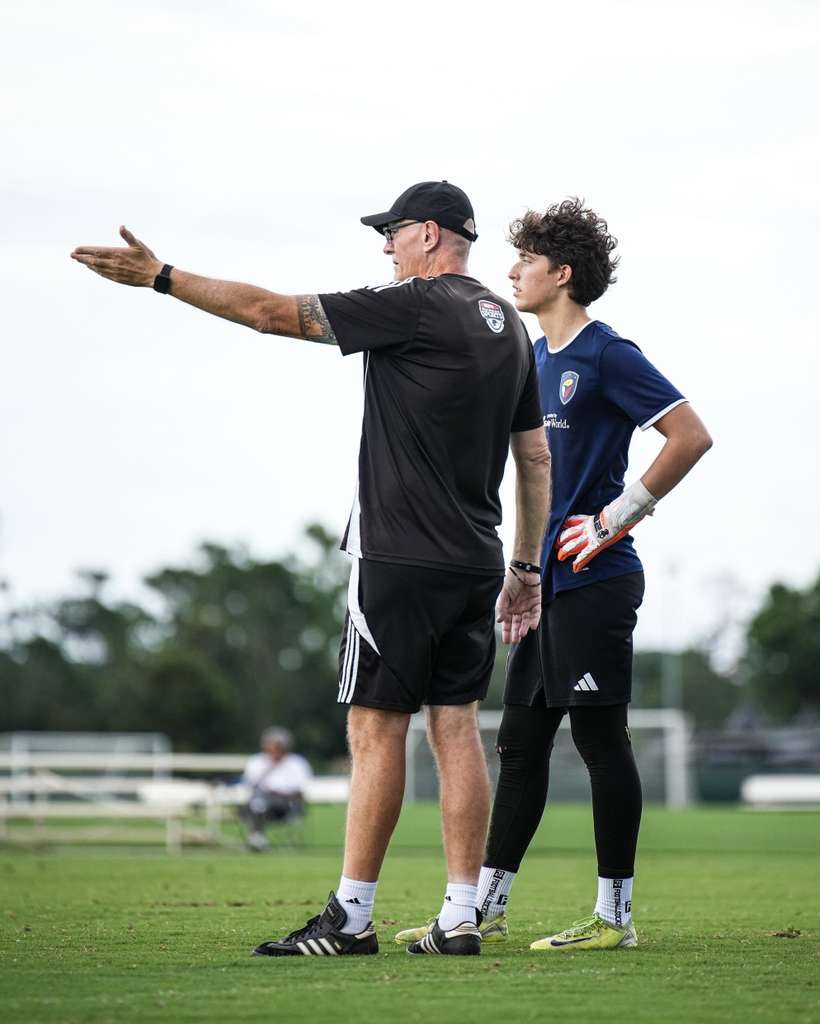
Once the baseline mechanics are solid, the single best investment a family can make is transitioning to tactical training, game reading, and defensive command and leave the club goalkeeper take care of the technical aspect!
A goalkeeper can have flawless mechanics on a training mat, but if they cannot read the pitch or direct their backline, those mechanics won’t stop the ball from hitting the back of the net.
How Parents Can Evaluate the Next Step:
If your goalkeeper has already mastered the basics—setting properly, attacking the ball, and using clean catch shape—it is time to evaluate where your private training dollars go next.
Before booking your next session, ask a prospective coach these three questions:
“What is your competitive match coaching history? How many years have you been doing so?” Have they actually guided goalkeepers through high-stakes matches on the sideline, or do they only run individual private workouts?
“How do your sessions teach backline organization and tactical awareness?” If the lesson is 100% footwork ladders and isolated shot-stopping, your keeper isn’t being taught how to read the pitch.
“How do you prepare goalkeepers for real-time match decision-making?” Technical catches are easy when you know where the ball is going. Real decision-making happens under match chaos!!
Value Game Intelligence Over Endless Shot stopping BS
Technical coaching builds the foundation, and for beginners and their club GK coach must perform technical sessions at least once a week, it is a necessary step. But once a goalkeeper knows how to set, attack the ball, and hold clean shape, continuing to pay for basic mechanical repetitions is simply duplicating what they already get at club practice.
The true differentiator between a good goalkeeper and an elite one isn’t another ladder or fancy dive drill—it is tactical depth, game-day awareness, and the confidence to command ten teammates under pressure.
Anyone can run a beginner through basic shot stopping drills. But teaching a goalkeeper how to command the field requires a coach who has actually stood in the fire on the match-day sideline.